

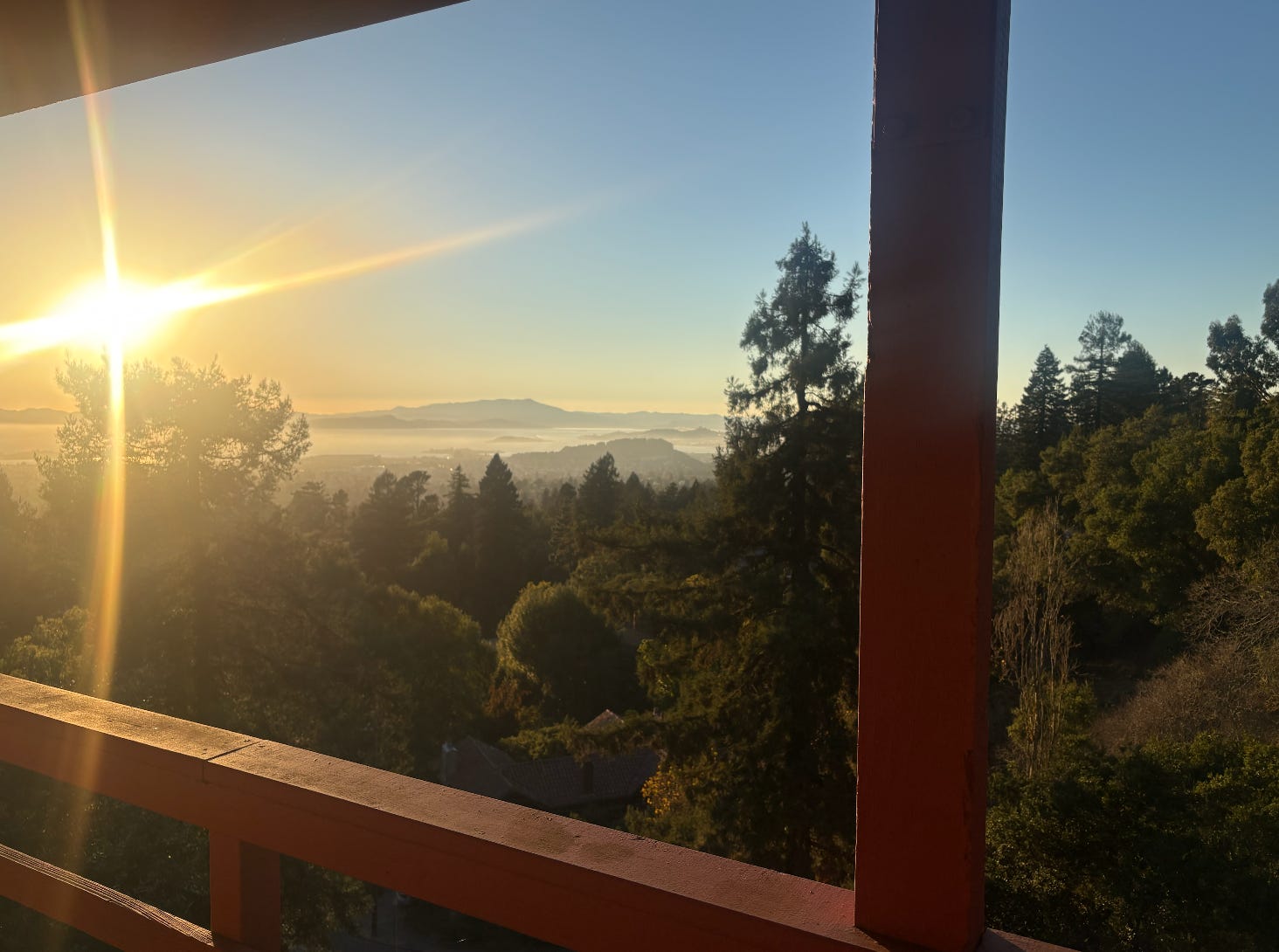
I like to travel alone as often as I can. I prefer to stay at monasteries when I do so. I have been making occasional visits to Camaldolese guesthouses since about 2015, and will likely continue doing so as long as there are Camaldolese to be found in the world. I am skeptical of hotels with an ethical mission statement, tied as they must be to the profit motive, even though I am also the target audience for hotels with an ethical mission statement. I am not myself a religious man, but when I arrive at a Camaldolese guesthouse and am greeted in quiet earnest by an elderly man whose life is ordered by bells, I know that when he says Sit in your cell as in paradise he knows what he is saying to me. The monk is not altogether divorced from a profit motive, I realize, inasmuch as he also has to live in the world, but I know exactly what he’s selling: a room for the night, some pointillist artwork of a nearby landscape, and maybe some fruitcake the brothers sell during the Christmas season.
Monst monasteries that offer lodging have a designated monk who also serves as the guestmaster, usually the most sociable monk in the community. If monks could be said to have a homecoming king, the guestmaster is it. He might speak as many as three sentences to you during your stay, rather than none – but what real affection is present in those few words! You could warm yourself by them for days.
As I say, I am not a religious man, but I do enjoy periodically drafting behind the religion of others, like a goose flying in the very back of a formation so as not to have to flap his wings very hard. The concept of “spirituality” does very little for me. I like my monks to have decided religious commitments, although I do not share them and I decline to participate in their communal prayer life whenever I make my stay among them. Monks make no constraints upon the poverty, chastity, or obedience of their guests; you are not inclined to follow their religion or share their values. (Nor need you be a man; some people mistakenly assume that monasteries will only accept male guests, but this is untrue.) They will ask you to conserve water, because California is always in a drought, and to leave your linens in a pillowcase by your bedroom door upon your departure, but otherwise the rule for guests is very light. You will likely need to make your reservation in advance, since monks do not accept walk-ins, and you will probably have to do so either by calling them directly or emailing the guestmaster. It is not always possible to book online. But what a pleasure to email a monk about a room! One feels transported both forwards and backwards in time at once.
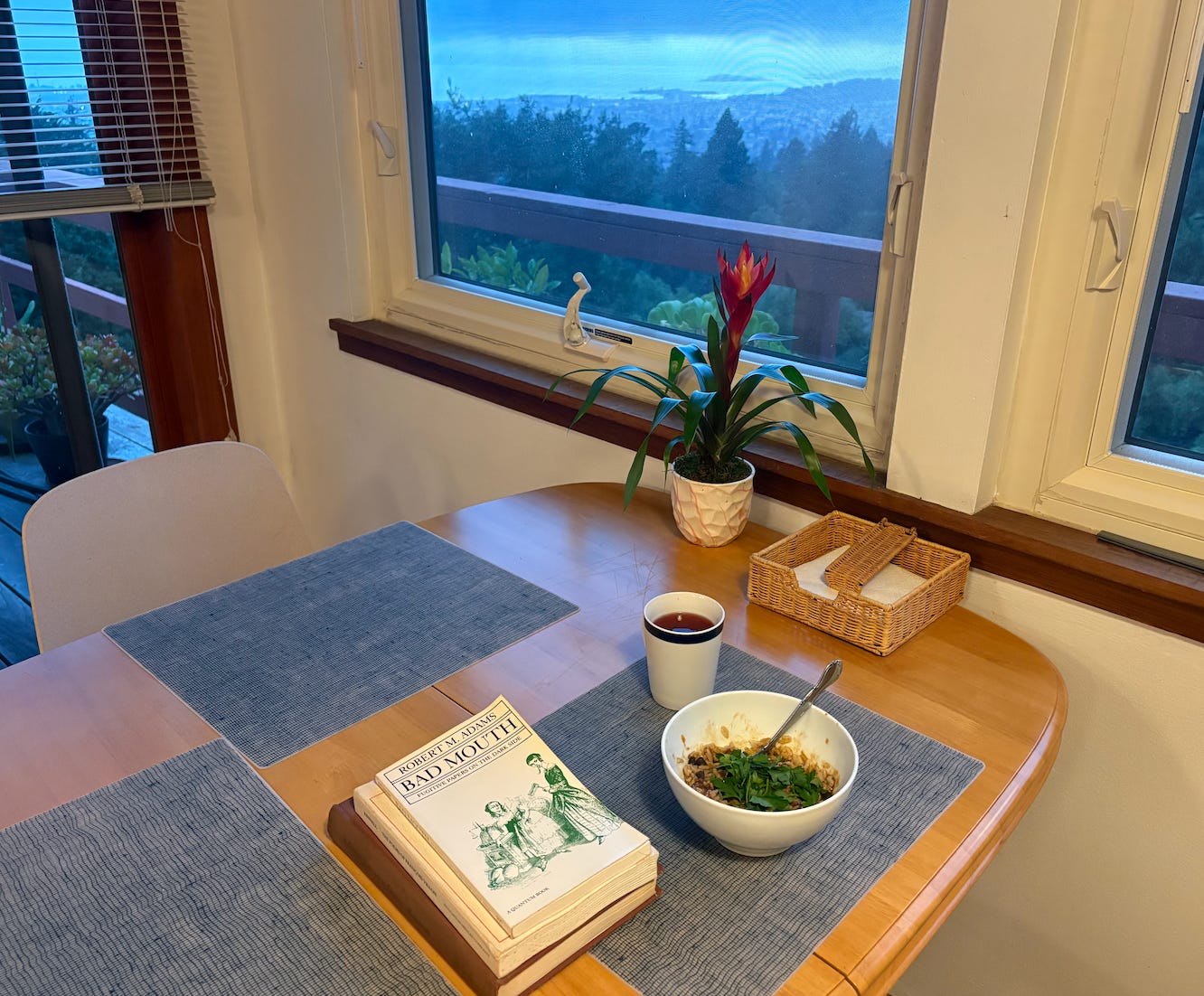
The Camaldolese are a type of Benedictine monk. Their founder, Romuald of Ravenna, established a hermitage in Camaldoli, Italy around the year 1000. The Rule of St. Romuald is brief. It begins, Sit in your cell as in paradise. Put the whole world behind you and forget it. Watch your thoughts like a good fisherman watching for fish. Empty yourself completely and sit waiting, content with the grace of God, like the chick who tastes nothing and eats nothing but what his mother brings him.
After some time, a few of the Camaldolese made it out to the West Coast of the United States. There are three Camaldoli houses in California, the state where I have passed most of my life. Two monasteries, one in the Berkeley hills and one in San Luis Obispo, as well as a hermitage in the Santa Lucia mountains, overlooking Highway 1 in the Big Sur region.
Staying in a monastery has several advantages: it is often significantly cheaper than a hotel in the same area, and more often than not, monasteries are located in areas of distinct natural beauty, with an eye towards peaceful solitude. A night at Incarnation Monastery in Berkeley will run you about $90, and will get you a plain whitewashed room with a closet, a twin bed, a desk, a recliner, a dresser, a view of some bay laurel trees, and access to a shared bathroom at the end of a hall. A night at the Hermitage will run you around $145, which is an excellent deal for Big Sur, and will get you a square-on view of the last sunset on the continent, where the sun falls directly into the Pacific Ocean through a net of fog, and is worth three times the price. The Hermitage also provides meals for all its guests. You can eat what the monks eat – good, straightforward, mostly-vegetarian food – although not at the same table, and not at the same time. At the monastery you have the right to your own shelf in the shared fridge and pantry. It is best to really enter into the spirit of things, in my opinion; whenever I stay at the monastery I bring a loaf of good bread, some peanut butter, a quart of minestrone soup, some fruit and cheese, and eat the same meal for the duration of my stay in quiet, deranged happiness.
Here is the difference between a monastery and a hermitage: in a monastery the monks live communally, under a single roof, whereas in a monastery they live slightly apart, in separate cottages. One roof per monastery; one roof per monk in a hermitage.
I prefer the Hermitage in Big Sur to all other places on earth, but it has grown almost impossible to visit in the last five years. A hermitage is of course meant to be isolated, but God has seen fit to grant them inaccessibility beyond even their scope of ambition. Every winter the rains wash out huge section of Highway 1, which is the only point of access. Whenever the damage from the mudslides are repaired, the road gets washed out again. When the road is not being washed away, it is being threatened by wildfires; the monks can taste nothing and eat nothing but what the State of California brings them.
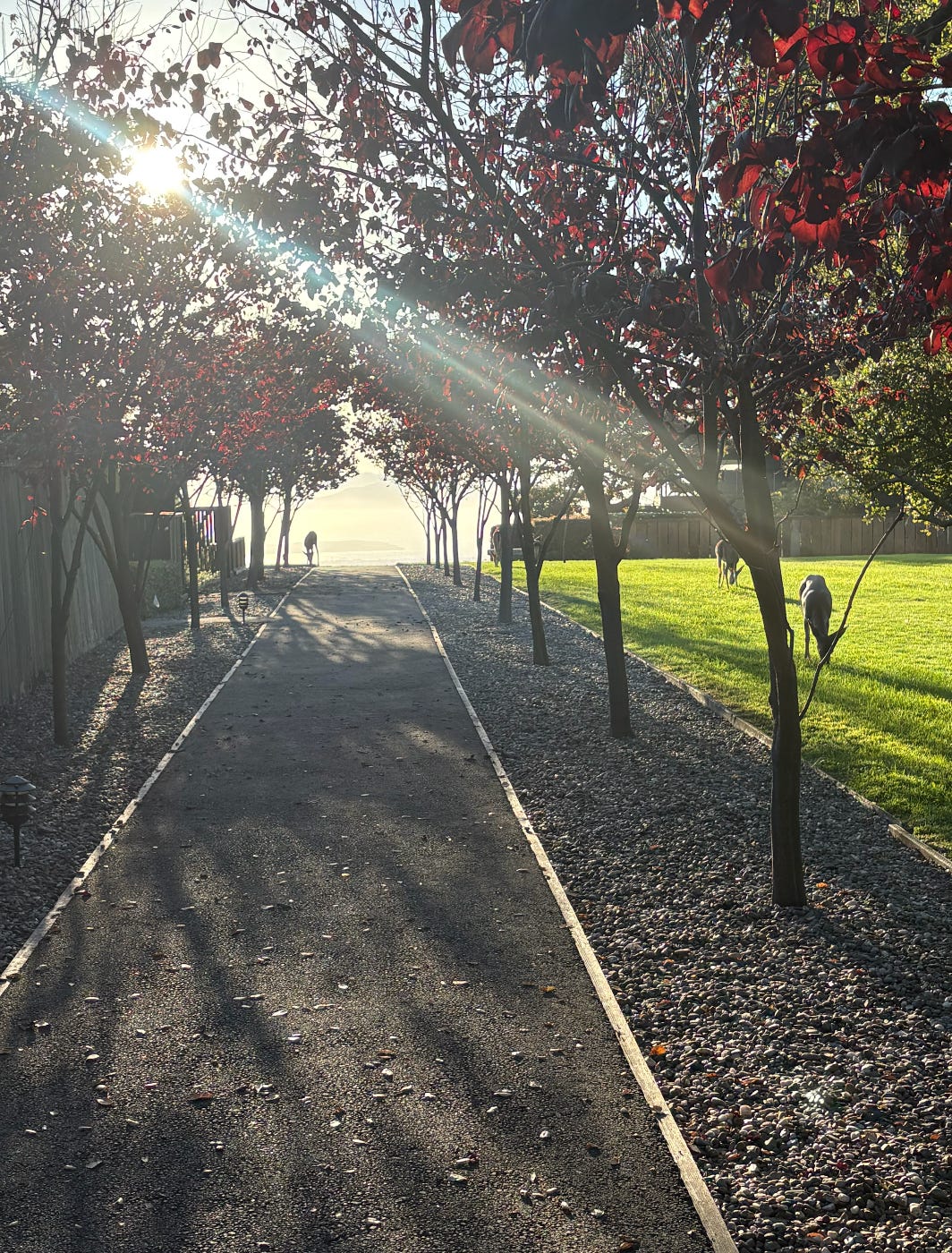
This year I began staying at their satellite monastery on La Linda Drive just above the campus of UC Berkeley, about a ten-minute drive from my own home in Oakland. Guests have very few restrictions on their time, but they are asked to observe the Greater Silence between 9:00 in the evening until the end of Lauds the following morning. After this guests must observe the Simple Silence for the rest of the day, until 9:00 when the Greater Silence kicks up again. Each cell has a little hand-stitched guidebook to orient guests that includes a primer on what I can only describe as harm reduction techniques for speech as one adjusts to talking very little. They give, by way of example, the possible problem of encountering another guest in the common kitchen during the Greater Silence, where the desire to be polite must be weighed against the shared quiet: “A nod of the head can be extended by way of greeting, rather than a verbalization.”
I come to the monastery when I most badly need to reorient my relationship to speech. I say speech rather than my phone, because I am sometimes uneasy about how people discuss our phones nowadays. Everyone seems to agree that they are shameful and unpleasant objects, that their ongoing use only further degrades our integrity, that we ought to put them away, that they can only produce a simulacrum of pleasure, never the real thing, and that they are hatefully necessary rather than useful or interesting. I do not want to give up my phone. Generally speaking, I like it, and I like the things I can do with it. But there are times when I want to check nothing, say nothing, ask and answer no questions, coordinate with no one, and a monastery is a good place to accomplish this.
My ideal relationship to my phone would be this: When I am looking at it, I want to be delighted by it; I want to take pleasure in its use, and to use it without recrimination. And when I am not looking at it, I want to feel ease and equanimity, secure in the knowledge that it’s not going anywhere and can survive a few minutes or hours out of my hand.
And I can certainly remember the various methods I used for wasting or otherwise blunting my experience of the passage of time before I had a cell phone at my disposal. So the phone isn’t the primary problem, the problem is something else. I come to the monastery when I don’t know what the problem is, because the monastery removes almost everything from me but the problem of when to eat and when to go to sleep, and I can work my way backwards from there to establish a diagnosis. I know perfectly well how to look at a bird or turn off my phone at home; there is never new information to be found at the monastery. But sometimes I have to sit in a room where it is impossible for me to either watch a movie or decide it’s time to start doing chores. I come here to read and sleep and look out the window and fall outside of time. I go to the monastery whenever I feel unfit to live around other people, and as soon as I get there I think, Finally, at last, I’ve found a way to be alone, at which point the monks remind me to relentlessly consider my own dependence, Empty yourself completely and sit waiting, content with the grace of God, like the chick who tastes nothing and eats nothing but what his mother brings him, and that gives me more than enough to do for three or four days at least.
This is really lovely, Danny <3