

I’m unpaywalling an old Chatner post from 2019 as the next book deadline comes down to bear on me (Women’s Hotel III is due at the end of October). This will either mean a great deal to you, or nothing:
Yesterday a friend asked if I’d ever read The Phantom Tollbooth – I think it had something to do with their work as an academic, but it might have been pursuant to that day’s Twitter conversation about that brief period in the 70s and 80s where junior high class schedules were a serious heroic asset in children’s fantasy:

“…Anyhow, he ends up in Digitopolis, and some related kingdom but for language, and he has to contend with – a lot of expressions keep coming true to horrifying effect, I guess, so the sunrise shatters the idea of sound at some point, and there’s a family who dangle in the air and grow down towards the ground, and he has to eat the concept of division, and rescue these princesses, Rhyme and Reason, who looked a little bit like those old caricatures of William F. Buckley…”
It was at this point that I realized five things:
Most of the illustrated characters in The Phantom Tollbooth looked a little bit like William F. Buckley
I had an absolutely inexplicable but profoundly stirring crush on William F. Buckley when I was a little kid, despite having no idea who William F. Buckley was (I saw him on old covers of Time magazine and had a vague sense that he was an old actor like Dick Cavett, who I also had a crush on as a kid, although I at least knew what he was famous for).
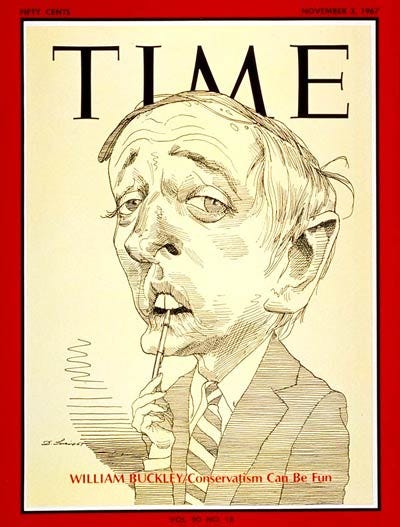
It’s perfectly explicable, come to think of it: Dick Cavett is 5’7, one of the most pulsingly attractive heights for a man to be (other attractive heights include 5’8, 5’9, 5’5, 5’10, 6’5, 5’11, 5’6, 6’1), fine-boned and carefully-assembled, like if God had to make a jockey out of a Precious Moments figurine, with a John Cazale hairline and the wryest eyebrows ever to wriggle across a forehead. The caricatures I’d seen of Buckley played up similar qualities: sneering little rabbit mouth, a sense of languor to the point of illness, heavy eyelids (I learned his less attractive qualities later, when I found out who he was, at the time I rather think I believed him to be a cartoonist himself).
I had understood on an intuitive and pre-verbal level that almost every character in the Phantom Tollbooth was my beau ideal, a mishmash of Cavett and Buckley and Little Boy Lost, in various disguises, and fallen in love with them all.
Love, or at least pre-verbal attraction, was directed at a vision of stymying, of intelligent bewilderment; the idea of someone brilliant and pensive and adept and a little bored set adrift on a sea of confusion, growing increasingly baffled, overwhelmed, sleepy and receptive, to the point of hypnosis and hallucination, placidity and pliability, horror and frozenness, inaction and fulfillment, helplessness and the sensation of being gradually and from all corners overcome. Not for nothing was one of my first crushes the sharp-eyed little boy delirious with fever in The Velveteen Rabbit.
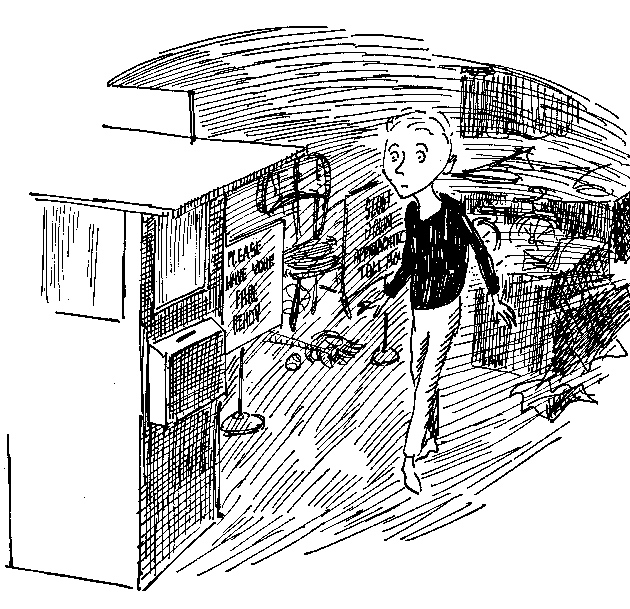
You can see what I mean here, I think (of course, perhaps you can’t!). Milo first, from the Jules Feiffer illustrations: Alert, slight, wide-eyed, guarded, precise, small enough for a jockey but perhaps too delicate a constitution to ever mount a horse, in a word, Cavettesque. (It should not surprise you to learn that I loathed Tock the dog, that clock-mounted beacon of vigilance, always reminding Milo of time and urgency and clear-headedness, always recollecting him back to himself.)
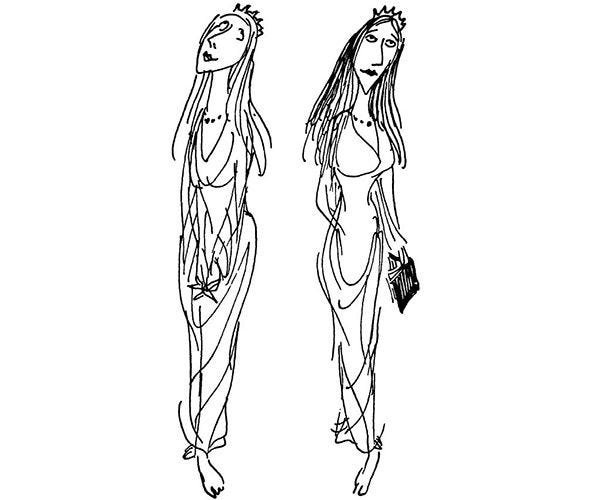
Next, the Princesses of Rhyme and Reason, who seemed to me to have longer, dreamier versions of Milo’s face:
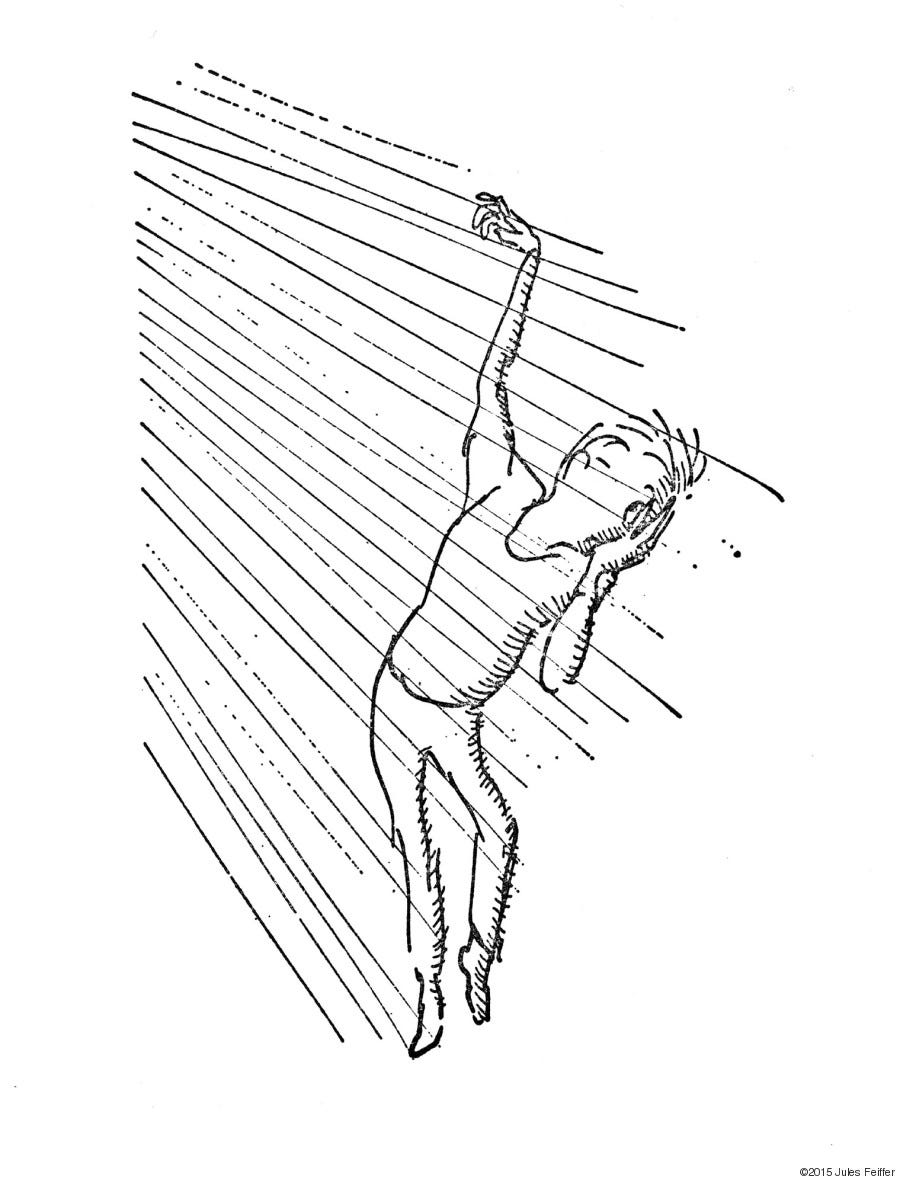
Milo again, this time trying desperately to conduct the sunrise – “He tried very hard to do everything just the way Chroma had done, but nothing worked. The musicians played on, faster and faster, and the purple sun raced quickly across the sky. In less than a minute it had set once more in the west and then, without any pause, risen again in the east. The sky was now quite yellow and the grass a charming shade of lavender. Seven times the sun rose and almost as quickly disappeared as the colors kept changing. In just a few minutes a whole week had gone by.
At last the exhausted Milo, afraid to call for help and on the verge of tears, dropped his hands to his sides.”
“He tried very hard…but nothing worked” – there is no more thrilling sentence to a dreamy, beleaguered young future trans boy; or at least there wasn’t for this one.
The real Buckley now, from Time Magazine, for comparison:
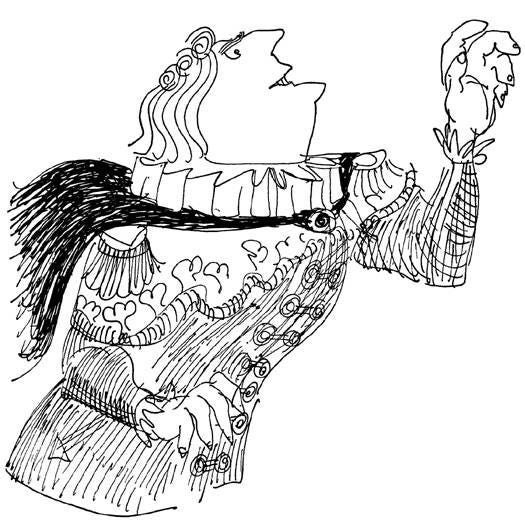
Now the Phantom Tollbooth’s King of Wisdom – Buckley in every sense of the word, from the ridiculous epaulets, absurd hairstyle, and grasping, cruel hands:
Finally Dick himself, from the Al Hirschfeld Foundation:
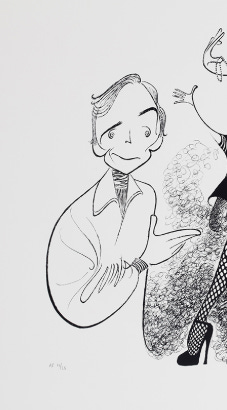
Yes, that’s Tim Curry from Rocky Horror cropped out; I know what I am and I know what moves me, and little Dickie Cavett beats out the glorious Tim Curry every day of the week and twice on Sunday.
Almost exactly halfway through Tollbooth Milo and his twice-hateful dog Tock stop at the house of the tallest man in the world, the shortest, the fattest, and the thinnest, and are continually directed to “try the next door,” where the same unremarkable-looking man answers them every time. “Just as they suspected, the other side of the house looked the same as the front, the back, and the side, and the door was again answered by a man who looked precisely like the other three.” But it’s not just that house – it’s every house, and every face, over and over again, Cavett and Buckley and a series of unremarkable pointy white faces growing more and more perplexed, until eventually you have to stop reading and fall asleep yourself, and I can’t think of a pleasanter dissolving sort of feeling than that.