

Joseph, being seventeen years old, was feeding the flock with his brothers. And the lad was with the sons of Bilhah and the sons of Zilpah, his father’s wives; and Joseph brought a bad report of them to his father.
Now Jacob loved Joseph more than all his children, because he was the son of his old age. Also he made him a tunic of many colors. But when his brothers saw that their father loved him more than all his brothers, they hated him and could not speak peaceably to him.
Now Joseph had a dream, and he told it to his brothers; and they hated him even more. So he said to them, “Please hear this dream which I have dreamed: There we were, binding sheaves in the field. Then behold, my sheaf arose and also stood upright; and indeed your sheaves stood all around and bowed down to my sheaf.”
-Genesis 37:5-7
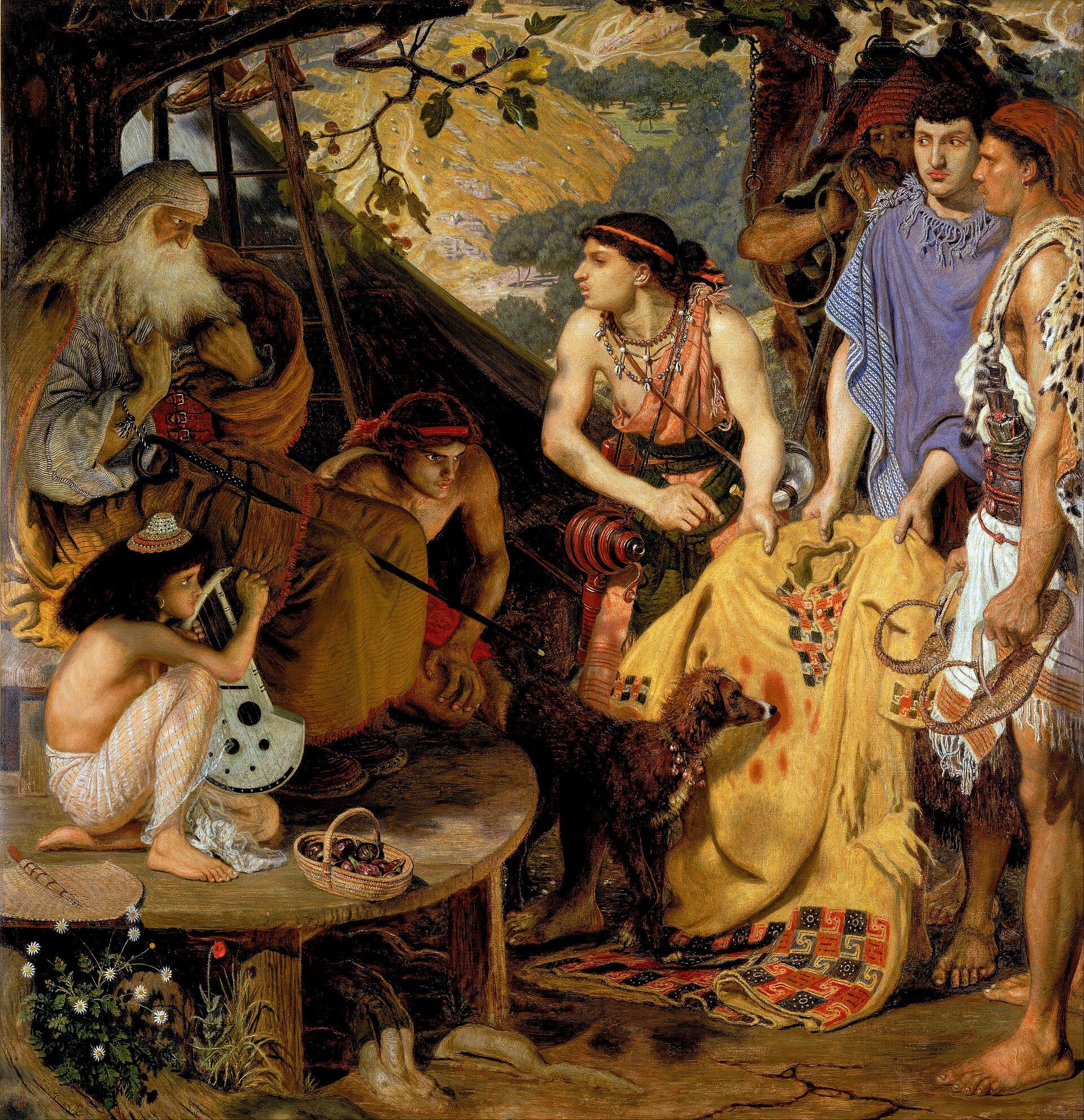
Now taken between them the sons of Bilhah and the sons of Zilpah amount to four of the thirteen, which is no small proportion of the family. You may not have known this, not being a shepherd yourself, but when you have four men watching a single flock, it is permissible, even customary, for one or more of them to slacken their vigilance. This is not a cause for concern. You have four shepherds; you don’t need them all on the highest alert imaginable. For one thing, that makes the sheep nervous.
At any rate, if you have concerns about your fellow shepherds on your very first day of shepherding, perhaps the more appropriate first step is to ask your fellow shepherds why it is they do something in a particular way, before you inform on them. By all means, if the answer you receive is unsatisfactory, inform away, but why not try to get the most accurate on-the-ground information from the parties concerned first?
We had been herding sheep for quite a few years with no complaints, at any rate, Dan, Gad, Asher, and myself. The sons of Rachel and Leah did not do too badly either, I might add. The sheep were all present and accounted for, ate during the day, slept at night, gambolled while hoggets, grazed placidly as ewes, charged about as rams, submitted to shearing in autumn, lambed in spring, et cetera.
I don’t mean to suggest it was impossible for anyone to object to the way we herded our sheep. There is always room for improvement. Never let it be said that the sons of Bilhah and Zilpah were not open to receiving useful suggestions from men who knew what they were about, i.e. men who had herded a sheep or two in their day, and not callow youths of scarcely seventeen, who hardly ever left their mother’s tent unless they thought there was something in it for them.
Now it is a known fact among pastoralists that, unique among all the men of the earth, we take great pains with our appearance. A hunter must needs blend in with his surroundings. A farmer has no time to dress; he must see to his crops before the sun has time to shine on him. But shepherds are unique among pastoralists, having such greater access to wool than the average, for the splendor of our fancy dress. We pride ourselves in the keeping of ourselves, and the sons of Jacob, whether by Leah, Rachel, Bilhah, or Zilpah were no exception.
We are careful, too, not to send too many compliments in any particular direction. We are judicious with our praise. A man may throw his back out putting together a remarkable garment and count himself lucky if he hears “New hat?” from his neighbor a month or two later.
“That’s a very fine coat Joseph is wearing,” my brother Asher said carefully the next morning.
“Well,” Gad said, taking a long drink from his wineskin and looking briefly in Joseph’s direction, “so it is a fine coat. What of it?”
“It’s a coat, certainly,” I said blandly, hoping to discourage talk of this sort. “I don’t know where he might have gotten the wool for it, though, unless I’m very much mistaken in the size of his flock.” It was brightly-colored, certainly, although very few of the colors did much for his coloring. He clearly thought a great deal of it, but what Joseph knew about dressing with style was about as much as what he knew about herding sheep properly. We didn’t want to puncture his self-conception, you know, but I worry now that we erred too far in the other direction, and let him think he’d gotten one over on everybody else.
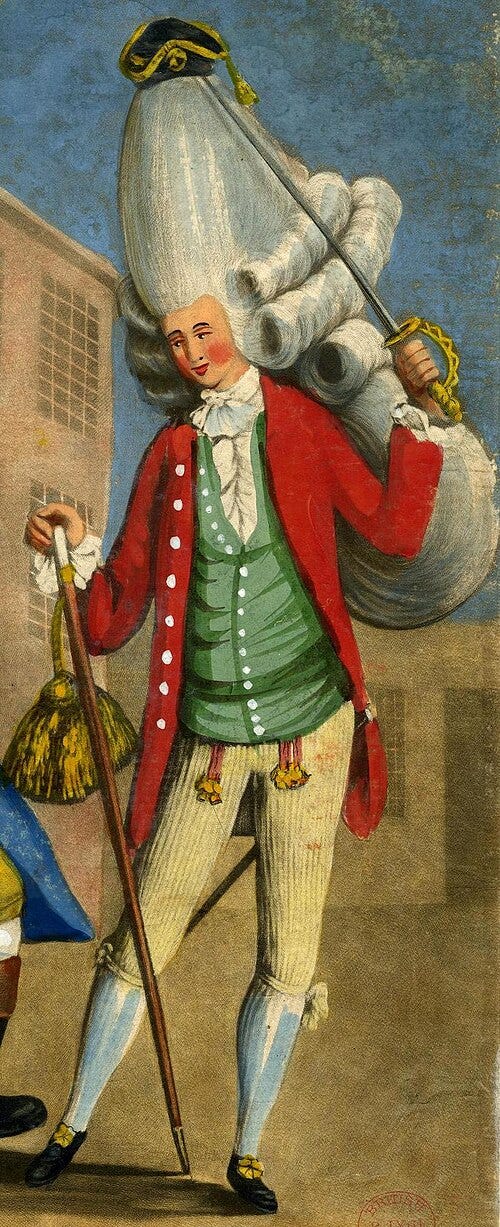
“I heard Father had it made for him,” Asher said, removing an imaginary speck of dirt from the faultless Mechlin lace on his Ascot tie.
It should perhaps go without saying that a shepherd who does not make his own coats does not count for much, among other shepherds. For the most part I believe the garments that were to come were all handmade. At least I have no reason to believe that any of my brothers pursued shortcuts, although I do know that between the twelve of us we were able to work on his sense of fairness sufficiently to come out the richer a few pairs of jeweled sandals, a steeplehat, an artichoke-colored doublet, a beribboned pair of Spanish breeches. His sense of fairness or his sense of guilt — who’s to say? But it is shameful, among shepherds you know, to let one son go around looking conspicuously finer in attire than the rest.
Next day Asher appeared at our usual gathering-place in a ridiculous peacock blue ensemble complete with a peaked cap. None of us said anything about it, we were so embarrassed for him. We were on slightly higher alert than usual that week, watching the flock for any signs of grain overload, as we had recently moved to a pasturage richer in barley than they were used to, but all of them adjusted beautifully.
As best I can recall, Joseph may have talked about a dream, and it may even have included binding sheaves in the field. But I don’t remember any further specifics. Certainly I think I would have remembered it if he had told us he dreamed we were all bowing to him. If anything, I remember thinking it a little sad, that in his dreams he was still no better than a popular farmer.
Later that week Gad turned up in a red swallowtail coat, jet-black topboots, and a turkey-feather gloves. Dan countered with traditional Carpathian national dress, which is heavily pleated and covered in highly detailed embroidery.
I myself had been working for some time on a robe à la polonaise — well before Joseph debuted his new wardrobe, mind you — and thought it would be silly not to wear it now, just because it would look as though I were doing it as a response to him, when really it had been in the works for months. It was very simply and very tastefully done, with a cutaway gown, fitted panels, and draped overcoat, with chinchilla fur trim all up the left side. The trick is to make sure the center and two far-back side seams all end in inverted pleats, the front being all of a piece held together with an underarm dart. It was a little daring, for our crowd, being so tastefully understated, and I don’t mind telling you I was a little nervous. Would this maximalist crowd really “get it”?
“It’s a bathrobe?” said Issachar, suited as a muscadin (bicorne hat, green jacket, huge necktie, drop earrings, thick monocle, hair dressed in the coiffure à la victime).
“Oh, don’t be tiresome,” said Zebulun, chapeau-bras balanced just so atop his white powdered wig, his wrists and throat absolutely foaming with lace. “I think it’s refreshing.”
Well, you know what brothers are like. In the end I really think Joseph did us all a favor, behaving the way he did; none of us have ever dressed more splendidly, either before or since.

This was fun, thanks!
“gambolled while hoggets,” lol