

If you enjoy vernacular indirect translations, try my runs at Sappho (parts II and III) and Catullus (parts II and III).
How to put this? I’ve seen my girl’s face and your man’s.
I’d sooner watch the turn of her steps
or the side of her face than your whole boyfriend,
who on his best day looks like Kashi cereal.
The Roman poet Tibullus lived from roughly 55 to 19 BCE. He wrote two books that people who ought to know are pretty sure about. He might have written more than the two, but then again he mightn’t’ve. In the work we do know him to have written, he never once mentioned Augustus, which may or may not mean anything. We also know that at one point he lost his farm, or part of his farm. Ovid calls him “polished” in the Amores.
His first book contains a number of elegies directed at a woman he calls Delia but whom Apuleius tells us everybody else knew as Plania. He — Tibullus — seemed to have a lot of trouble with her. The same book has a few elegies about a boy named Marathus, who also seemed to give him (Tibullus) a lot of trouble.
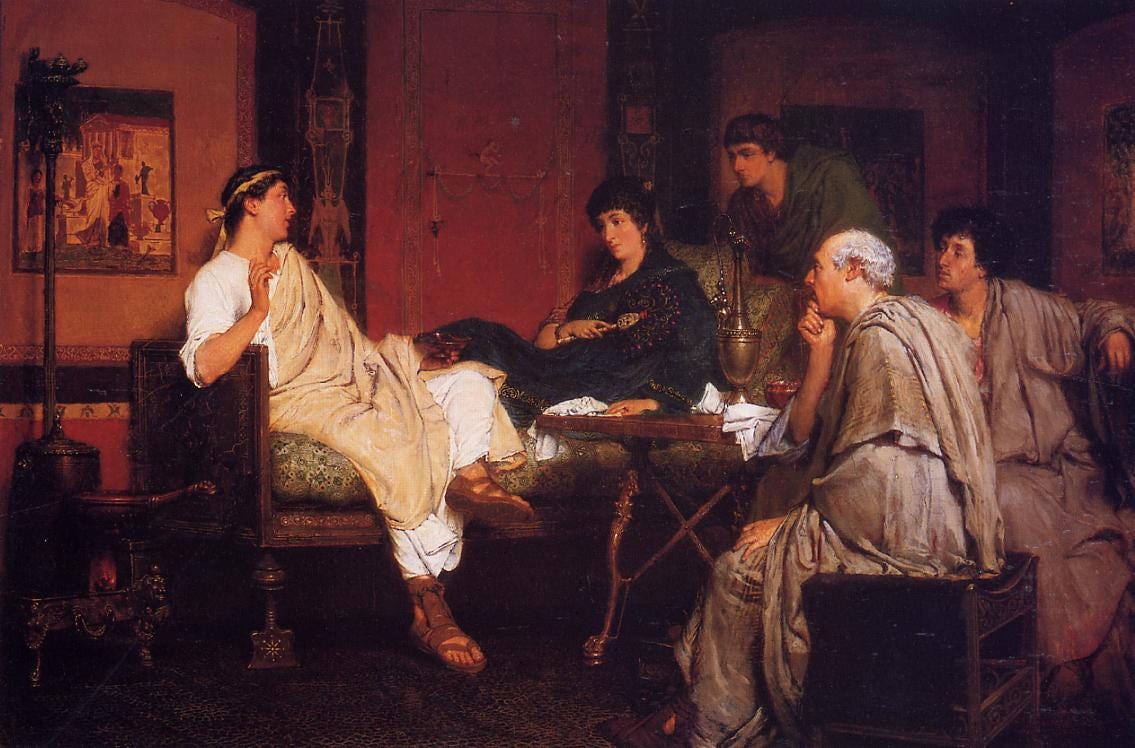
Elegy the First: The Simple Life
[Theodore Williams translation | A.S. Cline translation]
Other men can gild all the lilies they like!
Till, plow, rotate, boil: whatever it is you do to soil to make it rich,
I say have at it. And have it!
Get yours and fight to keep it; stab your neighbor,
Quit trusting windows,
And never again sleep a’nights for trumpets and war.
All I need is the endless cheerful humble flame in my simple modest unpretentious little hearthstone, which I built myself. A quiet life!
Life, but quiet, that’s the idea.
No wanderlust, no addiction to glamour.
When it’s hot, I find a tree, or a stream. Simple as. I see a problem, I solve it. It’s summer? Get your feet wet, sez I.
The hay-stalk might not be literally braced between my teeth —
but then again, as they say, Hell,
I’m not too good for it, either. Hell! Pass the chewing-hay, brother, and let’s lean against a post.
Overalls without a shirt, boot with a flapping sole, frog in the pocket, slingshot for good measure, you get the idea. A noble yokel. Not ashamed to pick up a shovel, if something needs shoveling.
Or pick up a lamblet, in the way shepherds do, braced around the neck, and if it happens to emphasize the trapezius muscles, so be it. I don’t pay attention to that sort of thing. I’m too busy conscientiously tidying rural altars in lonely fields.
And I don’t forget the tutelary deities while I’m at it, you know. I distribute votives and whatnots to the gods chthonic, rustic, Olympian, civic, di manes, et cetera, you name it.
My simple cot! You wouldn’t believe how well I sleep in my simple cot. If someone tried to offer me a luxurious bed bestrewn with violets and honeydew, I’d scorn it; unless that someone were a god in disguise, in which case, I’d humbly accept, since one should never scorn the gifts of the gods in disguise. What I mean is —
am I talking about my humble cot too much? You must tell me if I’m making too fine a point of it. The moths sing me a lullaby, you know, and I prefer the music of daffodils to the twanging of golden harps. I’m a very simple man!!!
If you were to even mention a jewel to me I would get violently ill. I can only look at streams. Or Delia.
Delia, that’s the ticket. You can keep your silks and your imported Scythian pride and your footstools. Let’s go live outside, barefoot all the time, knitting wheatstalks by the hearth…assuming one does knit wheat. I’m not quite up-to-date on the latest farming techniques. We’re pure of heart, we’ll figure it out. But if anyone so much as mentions a market commodity to me, I’ll scream.
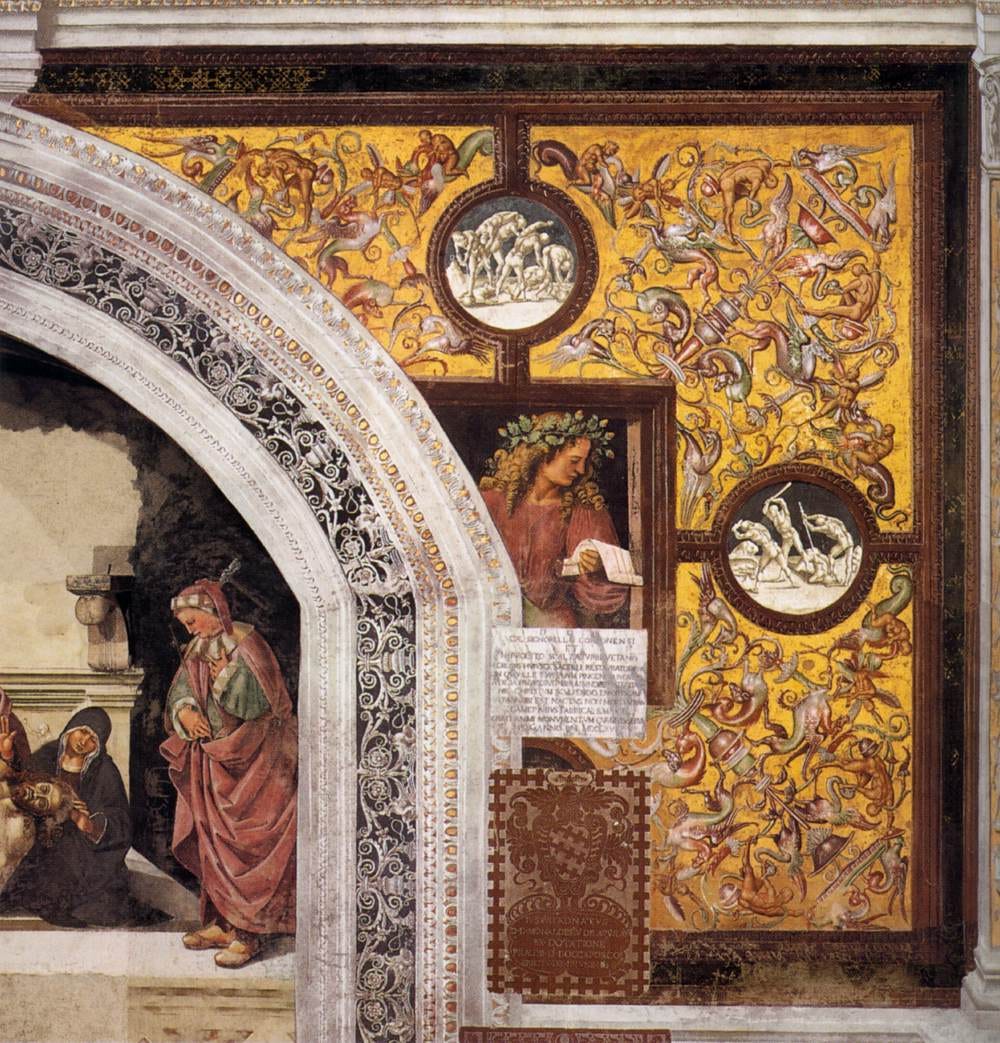
Elegy the Second: Pleading Time
The hour does not call for less wine, I think.
Let’s pit pain against the grape and see which puts paid to which.
