

I’ll watch pretty much any movie that primarily concerns itself with the rich inner life of a butler, as long as Julian Fellowes hasn’t gotten his hands on it.1 I wrote about Vatel, that most infamous of butlers,2 a few years ago for Lapham’s Quarterly and went a bit more in-depth about what appeals to me about the phenomenon I suppose I can only describe as Butler Psychology:
He was master of all servants except himself and very nearly not a servant at all. His role was not to absorb barked instructions and turn them into repetitive acts of obedience, as was the lot of a lower-ranked servant, but to act as if he were his own master in absentia, to think as he might think, to act as he might act, to anticipate and contrive on someone else’s behalf. The task of the maître d’hôtel was therefore doubly difficult: first, he must successfully twin himself, and once that impossibility was achieved, he must teach one of those selves to think like a master of servants, and then teach the other to take orders from the first.
But any Butler Movie has to decide pretty quickly where it’s going to land on the Butler Sorrows Index. You can either have a Happy Butler Movie, where the butler is a jolly and sneaky fellow who quite cheerfully countermands his master’s orders at every opportunity, or a Sad Butler Movie, where the butler is eaten alive by his own dignity and the audience can weep unrestrainedly at the spectacle of his gorgeously humble restraint. (When in doubt, apply the following rule: If the Butler Movie breaks on the side of emphasizing dignity, it’s sad; if it breaks on the side of emphasizing hauteur, it’s happy. A really happy butler is incorrigible; such films are rare and to be treasured.)
I am on the side of the Happy Butler, although like anyone I’m a sucker for a Sad Butler from time to time. The Remains of the Day drives me crazy in this sense, because it’s such an obvious, unrepetant, melodrama (“Oh, if only I could go outside. But I daren’t, for I am a butler!”) that sticks its jammy fingers directly into the most predictable nodes of my brain.
A while back I was joking around with a buddy of mine about the need for a version of The Remains of the Day from the perspective of Stevens’ new employer Lewis, as a brace against the cloud of self-pity hanging over the story, and came up with the following:
The Ford was not in the garage this morning. This was just another of the minor errors Stephens had taken to committing recently. Losing himself in little reveries while dusting portraits, a chore which ought to take no more than twenty minutes of his time, folding and unfolding an old letter in his breast pocket when he thinks nobody is looking, leaving me to handle the salmon alone when it’s really a two-man operation, that sort of thing.
In my experience there is no one more colossally thoughtless, more openly transparent in their wistfulness than people who think of themselves as being reserved. Butlers are often the worst of that kind. You know the type I mean. Swanning in and out of rooms in the most obviously distressed of tempers. Wanly pouring the sherry. Tedious little world-weary sighs while poking at the fire, followed by a barbed remark a week later about how tending to a fire is beneath a butler’s dignity, and twenty years ago there would have been a brace of lesser footmen to poke at it. Well, it isn’t twenty years ago, and I for one am plenty tired of being blamed for the fact.
And when finally you are driven to say “What’s that, Stephens?” you get nothing in response but “Oh-nothing-sir-will-that-be-all-for-the-evening,” with “the old Master would never have had to ask, he would have merely sensed what was wrong in his blood” never openly stated but all the more painfully implied. From the way Stephens tells it, the two of them barely had to speak a word to one another, just went floating over the grounds together in perfect sympathy, as if their brains had been connected by a coil of garden hose. I wish to God he was dead.
I’ve done my best to categorize all the Butler Movies I’ve seen according to the Happy/Sad Index. If it’s not on this list, it’s probably not a Butler movie. The Butler’s inner life has to be of primary importance to the plot. You can’t just throw a butler in there for a few scenes and call it a Butler Movie.
Happy Butler: Ruggles of Red Gap, 1935, Charles Laughton
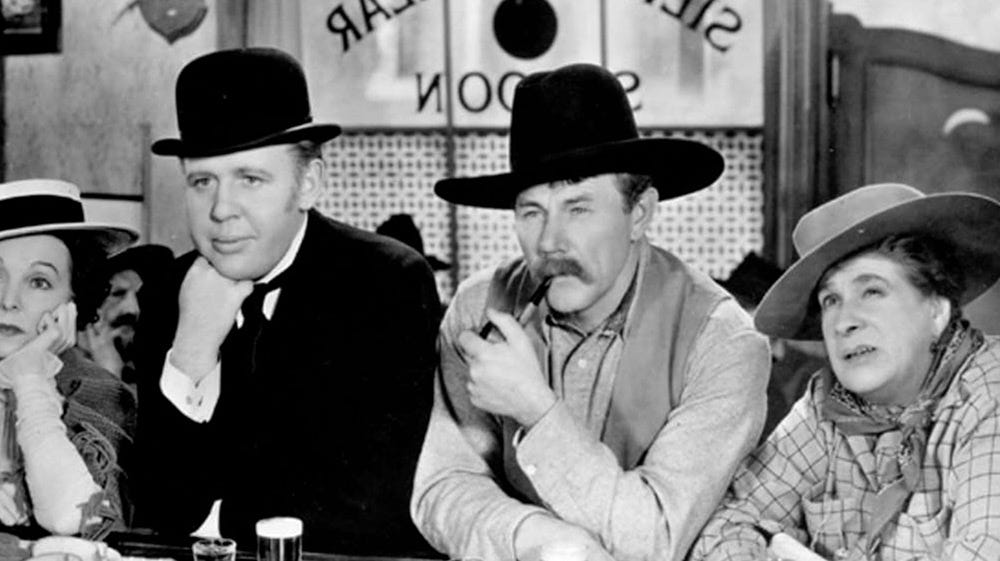
Ruggles is gambled away by the Earl of Bumstead in a poker game and leaves behind his life as a gentleman’s personal gentleman (I know I said no valets, but hear me out) in order to become the butler to an entire frontier town, where he learns about the value of the marriage plot and being a small business owner. It’s genuinely delightful, but if you have a low tolerance for yokel humor, it might not be for you. If you can’t stand Green Acres, I suggest you don’t bother.
Line most illustrative of butler happiness: “Why, you old plate of soup, they’re singing it for you.”
Sad Butler: Albert Nobbs, 2011, Glenn Close
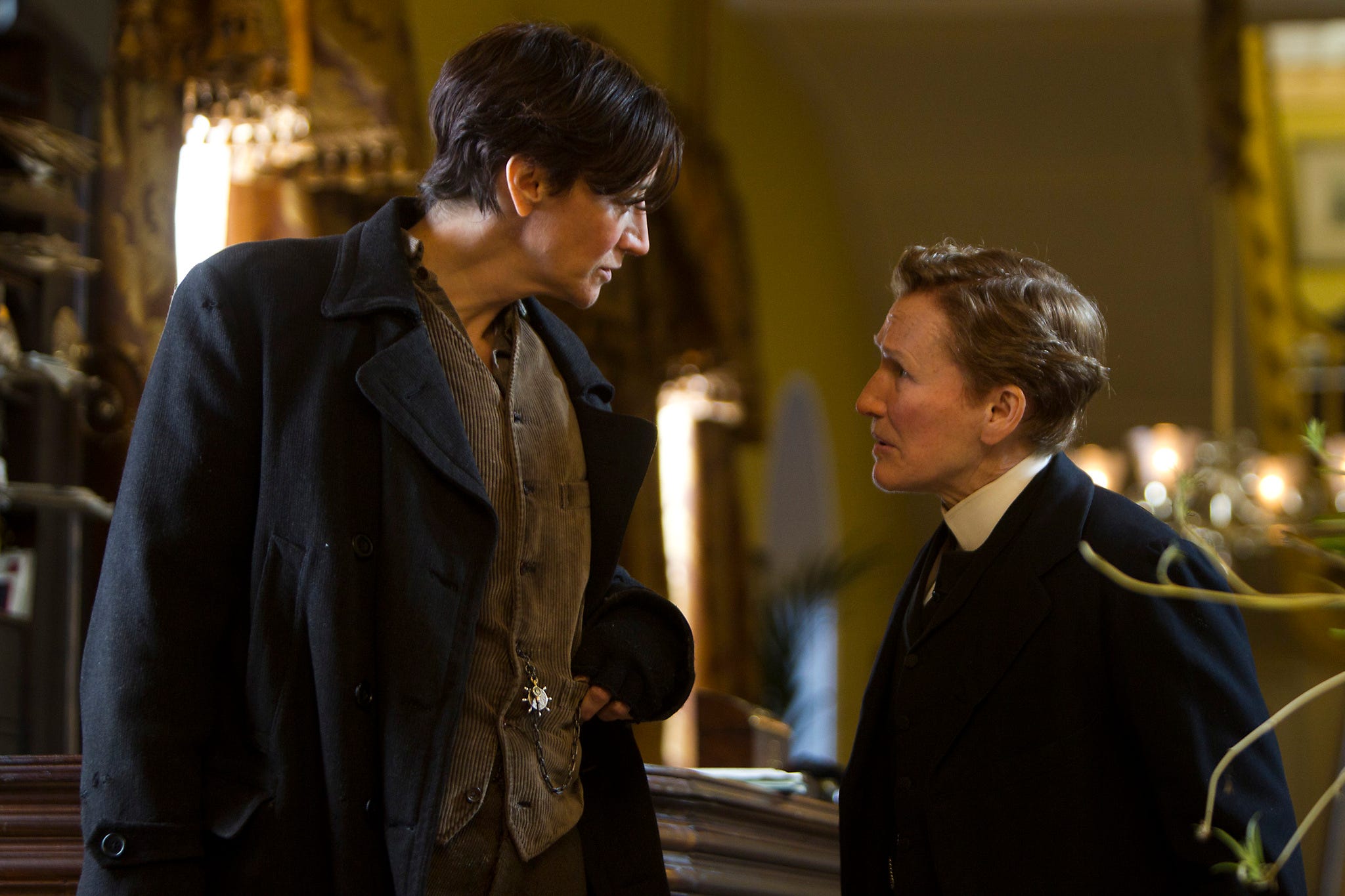
Ugh. Jesus! Do You Have A Moment To Talk About Historical Transmasculine Abjection. No I do not! It wants to be Of Mice and Men, which is bad enough, but it also wants pretty much every scene to be “Tell me about the rabbits again,” which is unconscionable. Skip!
Line most illustrative of butler sadness: “A life without decency is unbearable.” And the whole movie’s like that, too.
Happy Butler: My Man Godfrey, 1936, William Powell
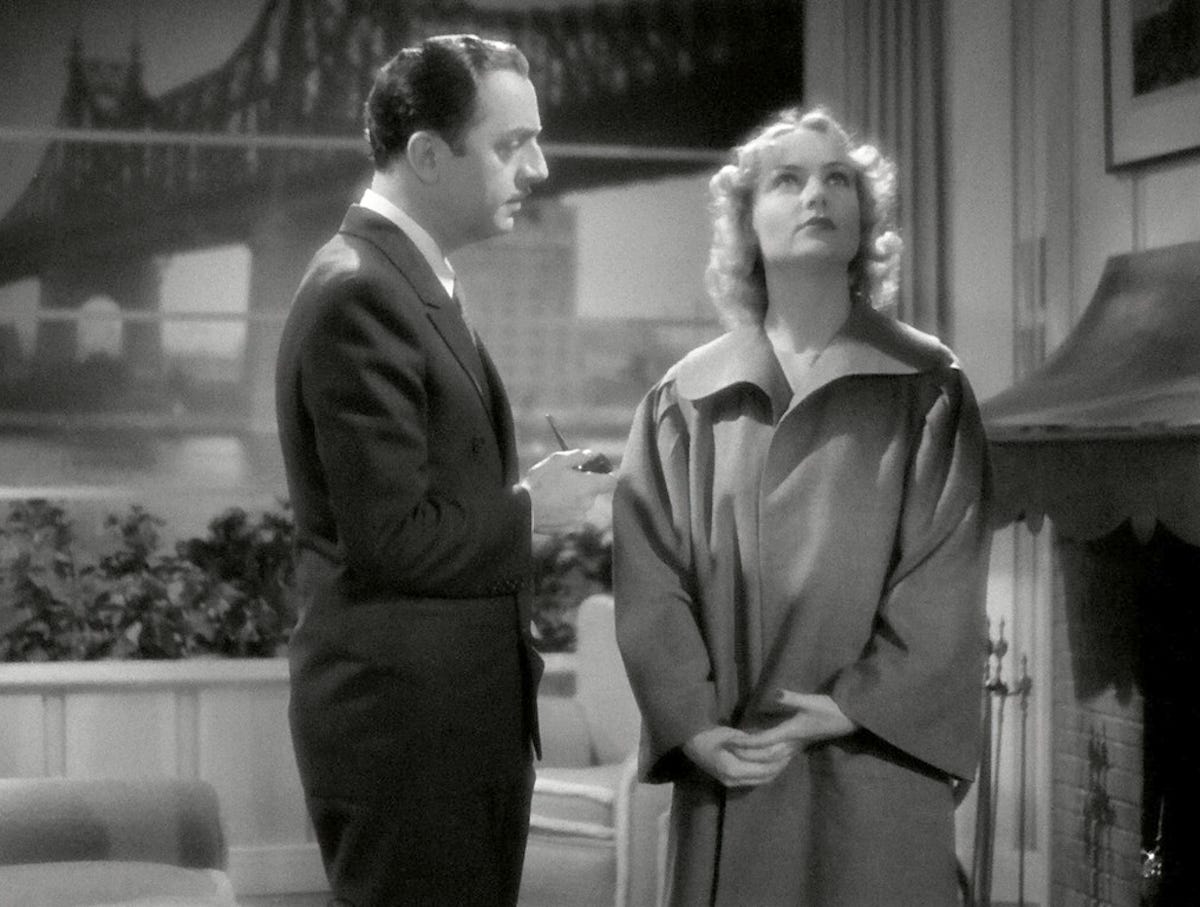
It’s terrific! You’ve already seen it, I’m sure, but it always bears a rewatch. He wears being a butler lightly, as Christ wore the mantle of humanity. A lot of Butler Movies ask the important question, “Can a woman ever fall in love with a butler?” If they’re sad, the answer is “No.” My Man Godfrey asks if an entire family can fall in love with a butler, and the answer is yes, so long as everybody takes turns.
Line most illustrative of butler happiness: “And I want to justify your faith in me by being a very good butler, and filling the void created by your late, lamented Pomeranian.”
Sad Butler: The Butler, 2013, Forest Whitaker
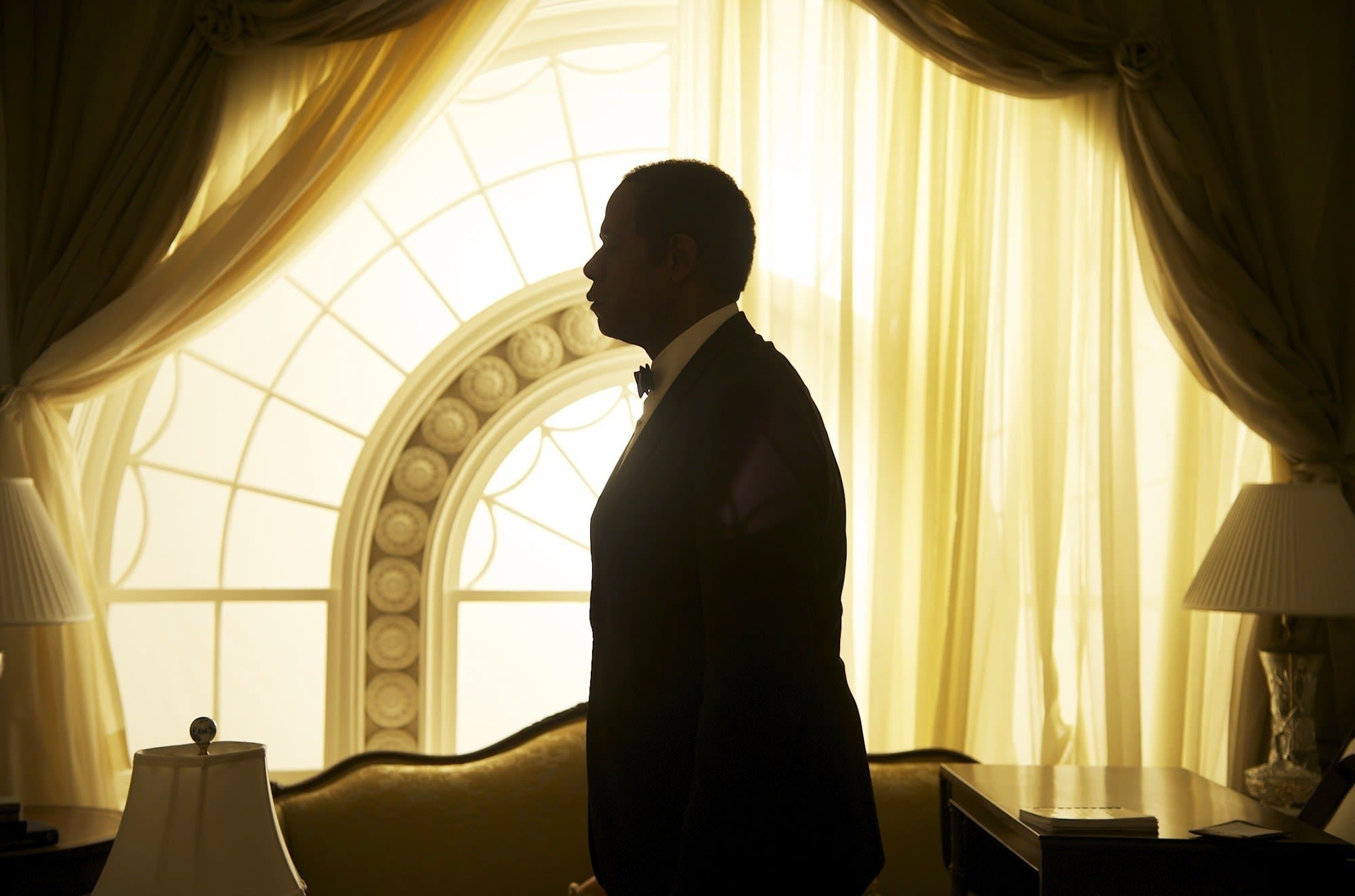
“The sixties are an important and exciting time.” You get the idea!
Line most illustrative of butler sadness: “Vietnam took my boy, and I didn’t understand why we were there in the first place.”
Happy Butler: Rebecca, 1940, Judith Anderson
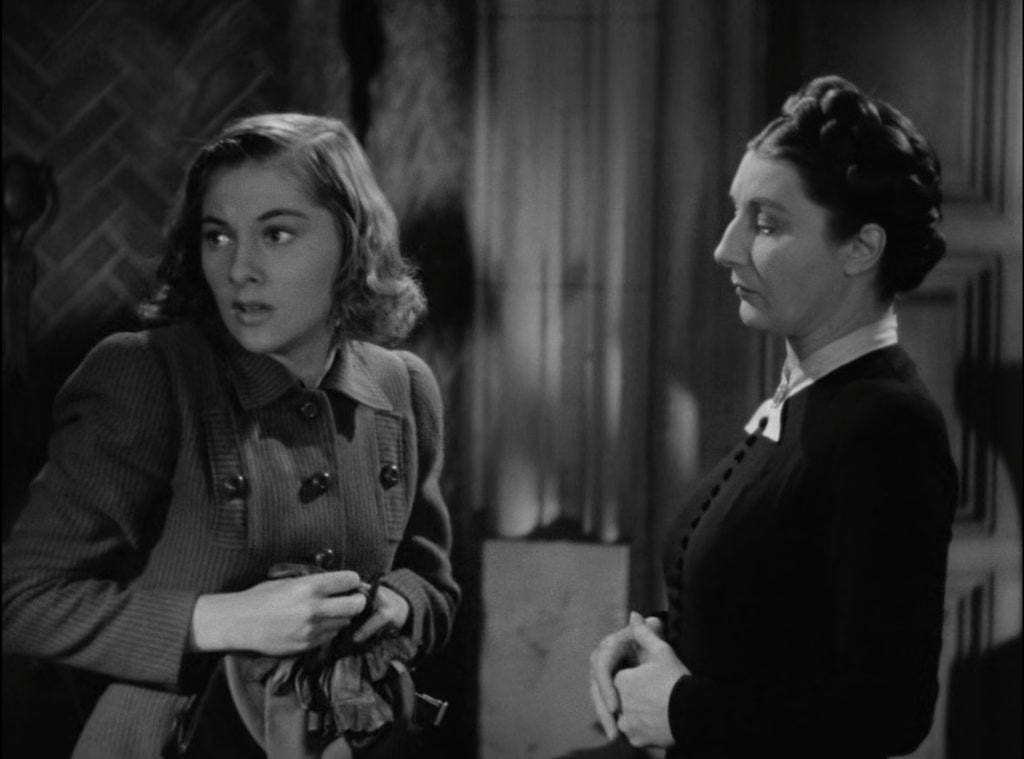
Don’t get distracted by Joan Fontaine’s mousy terror; this is a fundamentally happy movie. Mrs. Danvers is as thrilled as a pig in shit to be swanning over her dead girlfriend’s lingerie and waging psychological warfare over every meal. She loves being a butler! She owns all the underwear in the house and she hates you!
Line most illustrative of butler happiness: “You thought you could be Mrs. de Winter, live in her house, walk in her steps, take the things that were hers! But she’s too strong for you. You can’t fight her — no one ever got the better of her. Never, never. She was beaten in the end, but it wasn’t a man, it wasn’t a woman. It was the sea!”
Sad Butler: The Remains of the Day, 1993, Anthony Hopkins
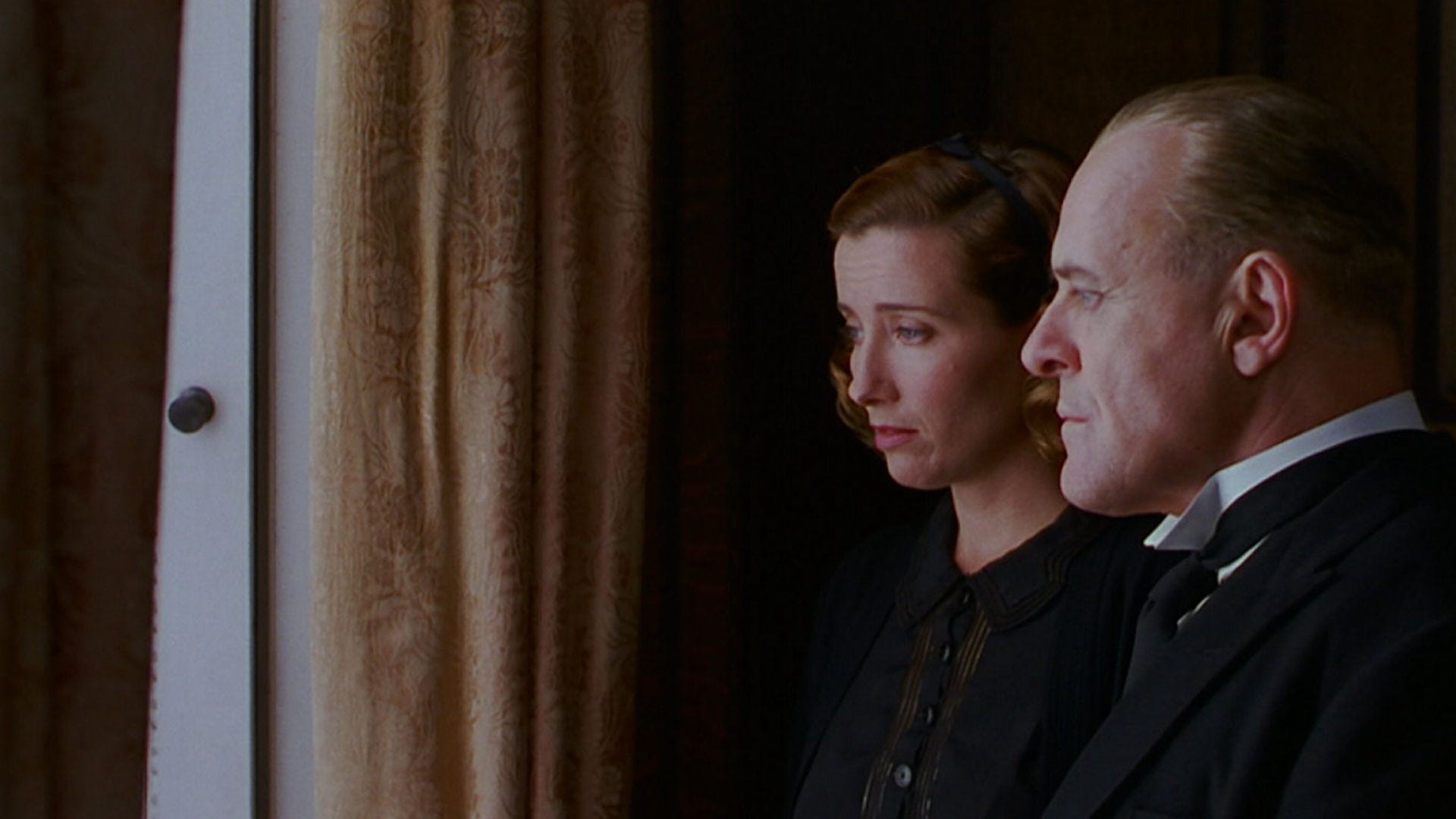
If you like Sad Butler movies, they don’t get much better than this, but it really does hit all the usual points. If you don’t have much patience for sad butler types, you’re going to get so sick of this man’s moony-eyed “I daren’t” attitude.
Line most illustrative of butler sadness: “You have my warmest congratulations.”
Happy Butler: Come September, 1961, Walter Slezak
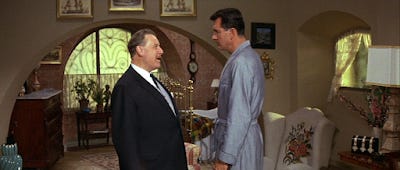
There is perhaps more of Bobby Darin in this movie than is strictly necessary — and I say that as a real appreciator of Bobby Darin — but if you want to watch a picture about a crafty and enterprising major-domo who’s fleecing Rock Hudson for every penny he can, they don’t get much craftier or enterprising than Walter Slezak.3
Line most illustrative of butler happiness: “Mr. Talbot will be here any minute! Madonna mia! He’ll find out, we are lost — but God helps those who help themselves.”
Sad Butler: The Admirable Crichton, 1957, Kenneth More
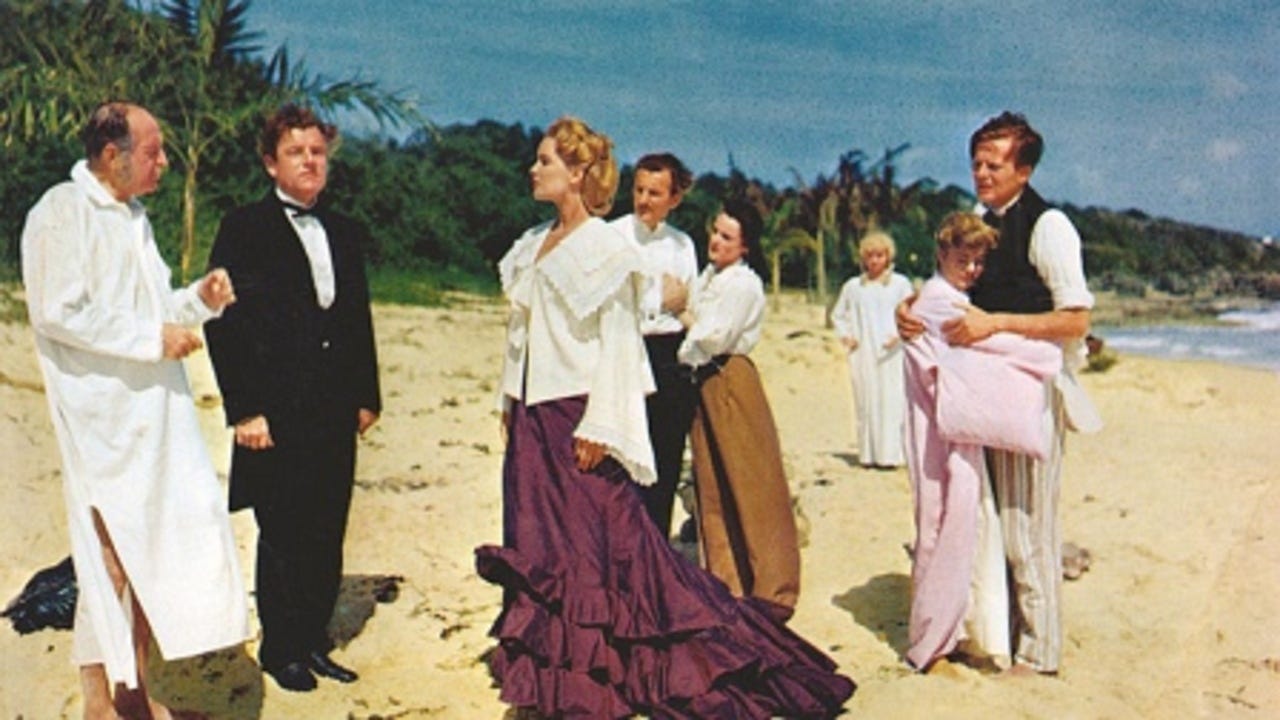
Line most illustrative of butler sadness:
LORD LOAM: Be a man, Crichton. You are the same flesh and blood as myself.
CRICHTON (in pain): Oh, my lord!
Gosford Park does not count as a butler movie. At best it counts as a movie about bells ringing.
Of course Vatel was not a butler but a maître d’hôtel. But I believe it is spiritually correct to refer to majordomos, maître d’hôtels, and chatelaines as butlers. Valets do not count, since they are responsible only for one man’s wardrobe; in order to qualify as a butler a person must be responsible for the graciousness of an entire household. Stewards do not count either, because they are close enough in dignity to their masters for usurpation to be possible; in this way they are easier to round up to viziers than down to butlers. Mrs. Danvers from Rebecca is a butler in this sense, because she has the keys to every room in the house and takes it as a personal affront when second wives aren’t up to snuff, socially speaking.
Who was also great in Lifeboat
For the list of Happy Butlers: Dick Van Dyke in Fitzwilly, scrambling to prevent his employer from finding out that her family’s wealth ran out years ago.
I once met a man who got a job as a valet to an English lord and what he told me would take pages but the main thing to know if you want to be one is that it's pronounced with a hard t, like mallet